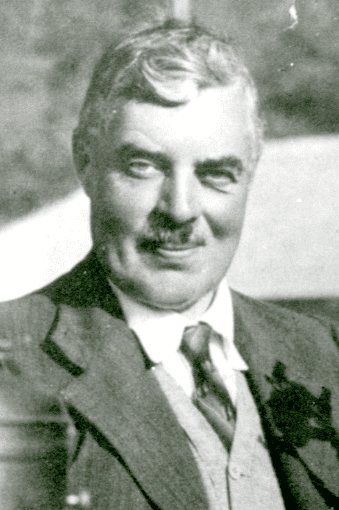

How many interests can one person pursue? Frederick Stratton demonstrated that the possibilities are endless. He left his mark on English history as an astronomer, physicist, parapsychologist, and soldier. His multifaceted life story is both extraordinary and inspiring. Next on ibirmingham.
A Creative Environment
Frederick Stratton was born on October 16, 1881, in Edgbaston, Birmingham. He was one of eight children in the Stratton family, which included five sons and two daughters. His father, Stephen Samuel Stratton, was a renowned music critic and historian, placing the family within Birmingham’s cultural elite. Their home was frequented by prominent musicians and poets, providing Frederick with a nurturing environment of culture and creativity.
Despite his exposure to the arts, Frederick pursued a different path. His parents ensured he received an excellent education, sending him to King Edward’s School in Birmingham in 1891. Six years later, he attended Mason College, which later became the University of Birmingham. Excelling academically, Stratton earned a scholarship to Cambridge University, where he studied languages (Greek and Latin) and mathematics. Graduating with honors in 1904, he received the prestigious Isaac Newton Scholarship and Smith’s Prize for his achievements in mathematics and physics.
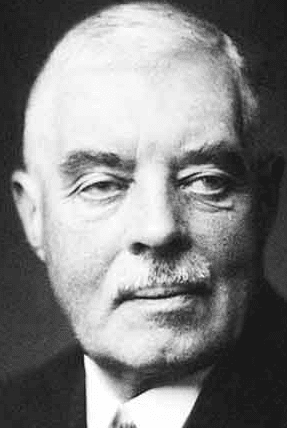
Soldier of Goodwill
Stratton might have excelled as a career soldier had he not chosen science. His military aptitude was evident during his time at Cambridge, where he joined the university’s Rifle Volunteer Corps in 1901. By 1908, he was involved in officer training at the university, earning the rank of second lieutenant in 1910.
During World War I, Stratton served with distinction. He was recognized for his resilience and cheerfulness despite the harsh conditions of trench warfare. His leadership and diligence earned him several promotions. In 1919, Stratton was honored with France’s Legion of Honour and was made an Officer of the Order of the British Empire.
After the war, Stratton returned to Cambridge, where he continued training officers and managed the Signals Section of the Officers’ Training Corps until 1928. At the outbreak of World War II, Stratton, despite being 60 years old, returned to service. Initially commanding a cadet training unit, he later took on a role in radio security, traveling extensively for his assignments. He remained in service until 1945, long past the age of retirement.
Among the Stars
Stratton’s passion for astronomy began early in his academic career, overshadowing his interest in mathematics. From 1913 to 1919, he served as an assistant director at the Solar Physics Observatory in Cambridge and later worked at the Cambridge Observatory until 1947.
In the 1930s, Stratton joined both the Royal Astronomical Society and the Astronomical Society of France. His research primarily focused on the Sun and novas. He was instrumental in creating an atlas of the spectrum of Nova Herculis, the first comprehensive spectral atlas of a nova. Stratton also studied other novas, including Nova Persei, Nova Lacertae, and Nova Geminorum. He participated in numerous global expeditions, often observing solar eclipses.
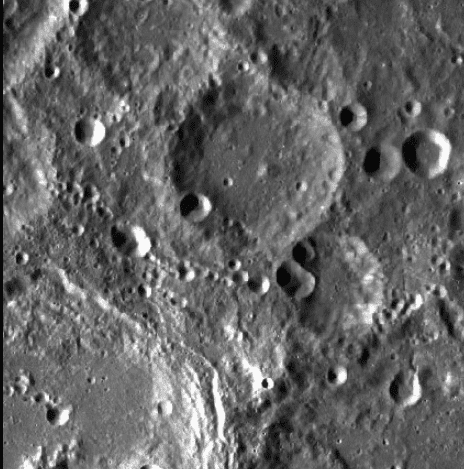
In recognition of his contributions to astronomy, a crater on the far side of the Moon was named “Stratton” by the International Astronomical Union in 1970.
In addition to his astronomical achievements, Stratton had a keen interest in parapsychology. He served as the president of the Society for Psychical Research, an unusual pursuit for a scientist and soldier. His exploration of the paranormal added yet another layer to his fascinating life.
Despite his remarkable career and diverse interests, Stratton’s personal life remained relatively private. He never married and had no children. Nevertheless, his legacy as a brilliant scholar, dedicated soldier, and pioneering astronomer endures, reminding us of the boundless potential of human curiosity and perseverance.