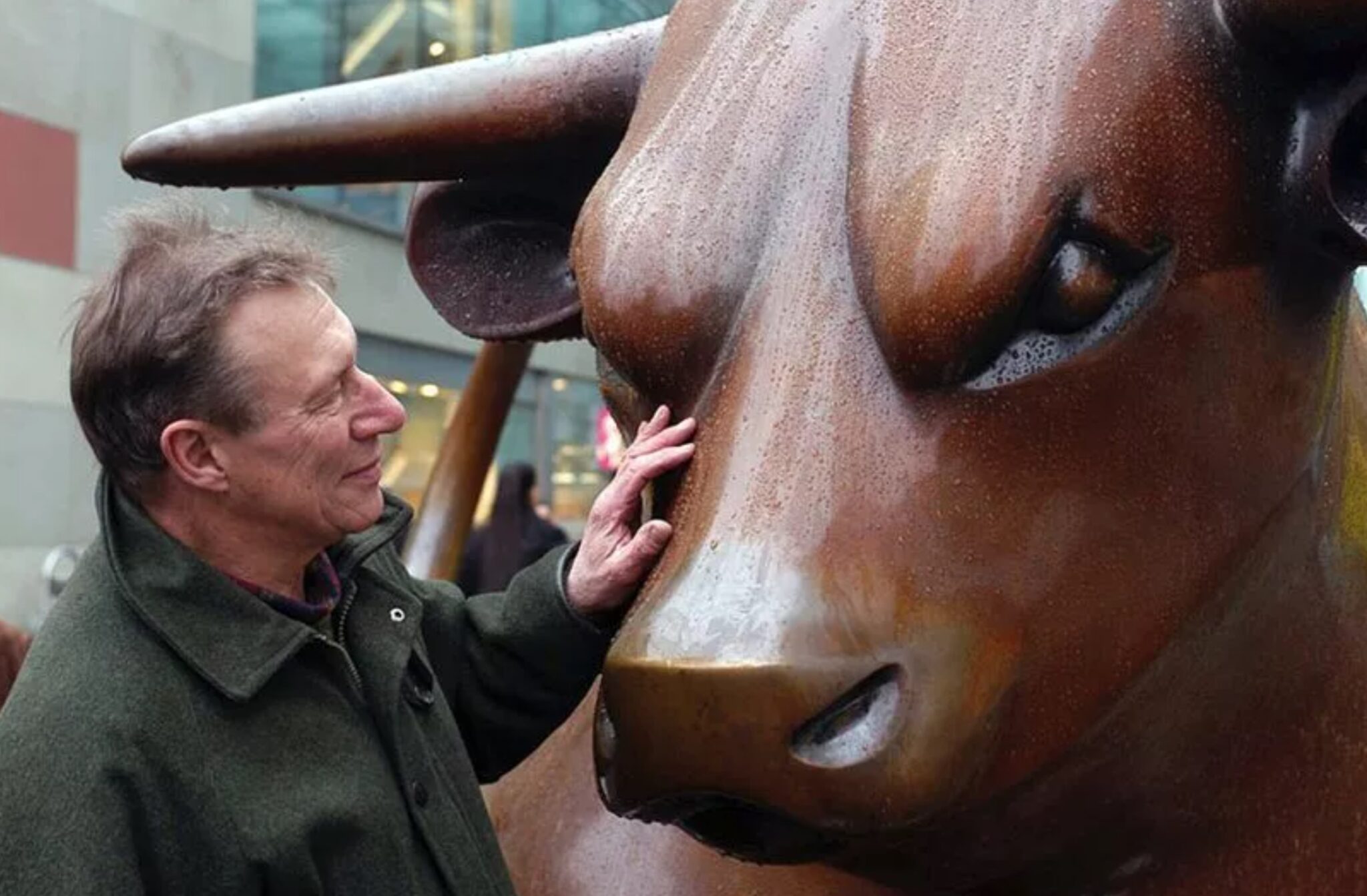

Laurence Broderick became famous thanks to his The Guardian sculpture, popularly known as The Bull, located in the former city bullring. The giant bronze bull was installed in 2003 as the centrepiece of the city’s new shopping centre.
In 2015, The Guardian became as popular as the Statue of Liberty and Michelangelo’s Statue of David and was recognised as one of the best works of public art according to a survey conducted by the British newspaper The Independent. Its creator and Bristol native Laurence Broderick very modestly told The Birmingham Mail that he couldn’t even imagine that The Bull would become so successful. Learn more about Laurence Broderick’s life and activities at ibirmingham.info.
Childhood and education
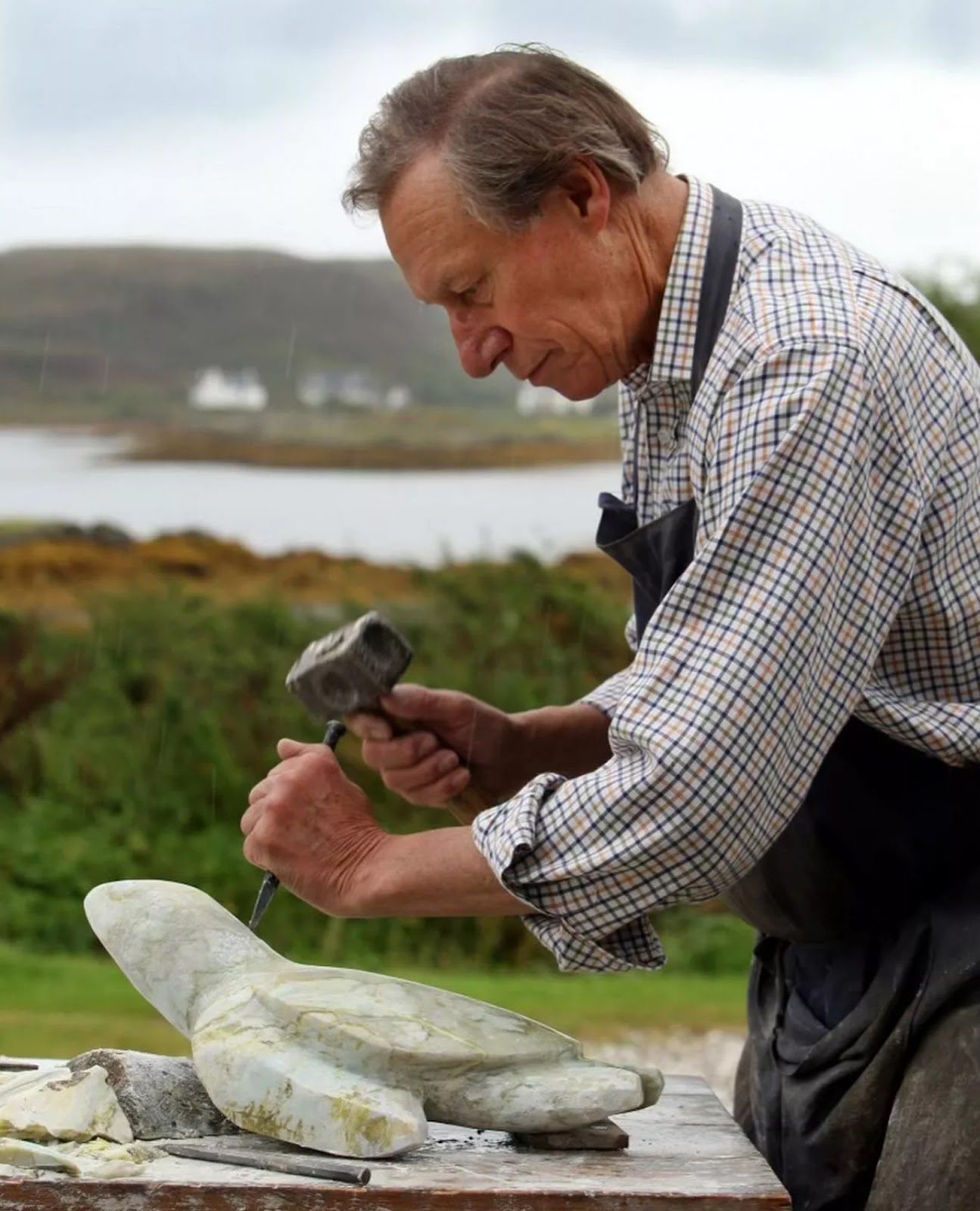
Laurence Broderick wasn’t a native of Birmingham, but he had so much in common with this city. Laurence was born in Bristol on June 18, 1935, in the family of Jack and Cynthia Broderick. As a child, he suffered from asthma and there were no inhalers back then. Therefore, the boy was sent to Bembridge Boarding School on the Isle of Wight. His parents hoped the sea air would help improve their son’s health.
Laurence got interested in wildlife because of his disease. Despite his health problems, he loved to draw and knew he wanted to be an artist. Laurence studied painting, illustration and sculpture and gained his degree. From 1952 to 1957, he studied at Regent Street Polytechnic (now the University of Westminster). His sculpture teacher was Geoffrey Deeley, who had previously taught Sir Anthony Caro. Then he went on to Hammersmith School of Art (now West London College), where he studied until 1961.
Artistic career
After graduation, Laurence Broderick became a historical and educational illustrator for the BBC. In addition, he illustrated many books as a freelance artist. Laurence used his own technique of drawing with pen and ink. Then he moved from London to Worsley. Close people knew that the reason for his move from the capital to the north was affordable housing.
Even though the artist was extraordinarily talented, he became really famous when he was nearly 70 years old. Then he won the Birmingham Commission. Previously, he made small sculptures, in particular, of otters. At that time, the talented artist didn’t have enough money and didn’t care where his works would be exhibited.
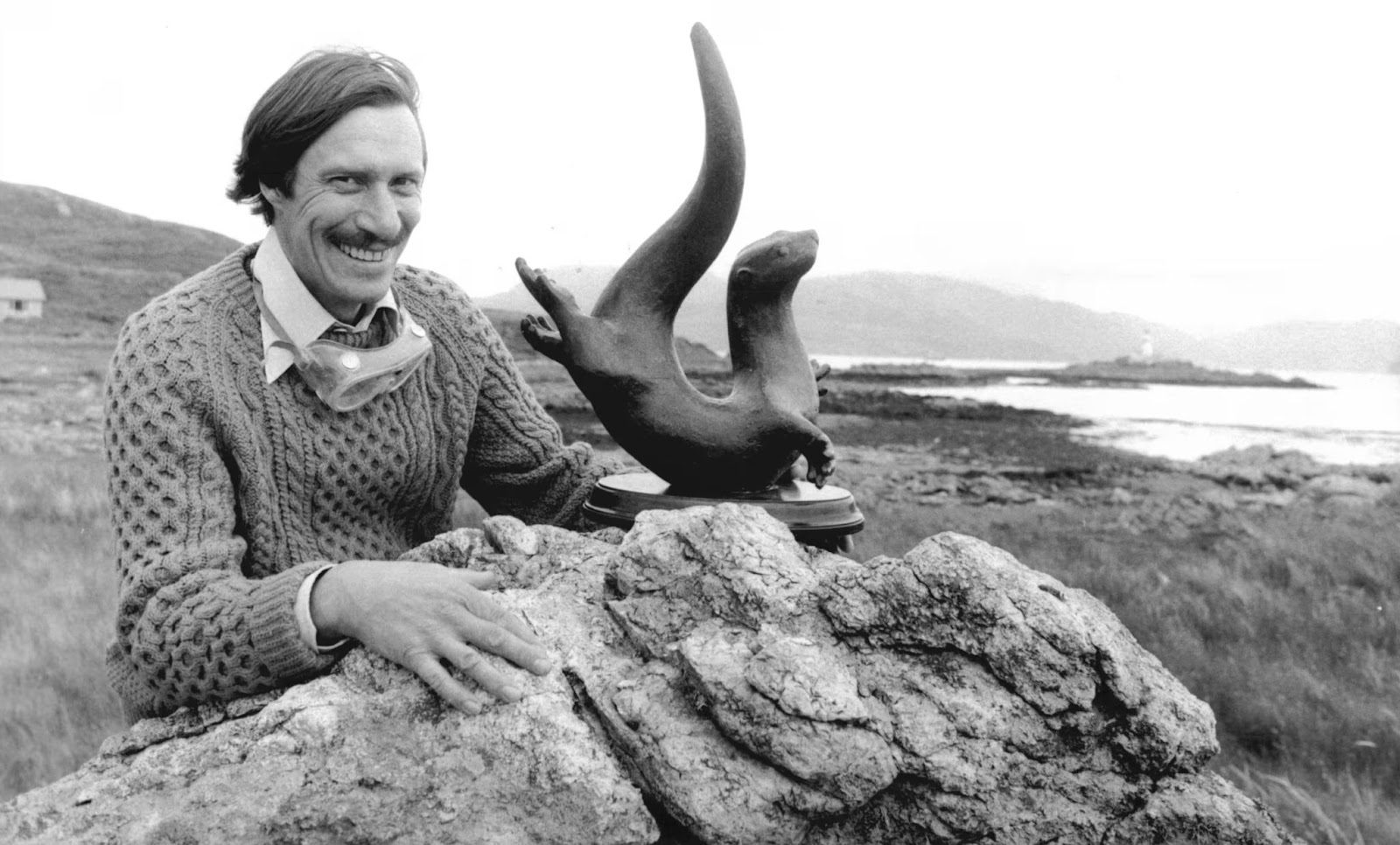
By the way, it was an otter that allowed Laurence to work on sculptures full-time. For 20 years, he taught art at the Haberdashers’ Aske’s Boys’ School in Elstree, Hertfordshire. Interestingly, Formula 1 driver Damon Hill was one of his students. During a family holiday on the Isle of Skye in 1978, the artist was so fascinated by a wild otter he saw swimming in the sea that he decided to carve it out of a local stone. Three years later, Laurence received an offer to organise a solo exhibition on the island, which, by the way, was completely sold out.
Laurence Broderick finally could afford to quit teaching at the age of 46. In gratitude to the little animal, Broderick became co-president of the International Otter Survival Fund, based on the Isle of Skye. For 26 years, he returned to the island every summer to work in his studio.
Creating The Guardian
The creation of the three-metre-tall, seven-ton bronze bull began with Laurence studying the animal in real life. He visited farms near his home in Waresley, Cambridgeshire. In addition, the sculptor spoke to local farmers, asking them all about bulls. Thus, he learned what makes them strong and powerful. It turned out to be their shoulders. Later, the artist recalled that while observing the animals, he came to the conclusion that they were very static, except for the youngsters, who constantly approached the fence. So, he was looking for an interesting pose for the sculpture.
There were at least 14 sketches of The Guardian until Laurence chose one. He made a small model and then a half-metre plaster replica. The sculptor scaled it up twice its size to create The Bull that can be seen in Birmingham today. The work has been called one of the world’s most famous public art sculptures.
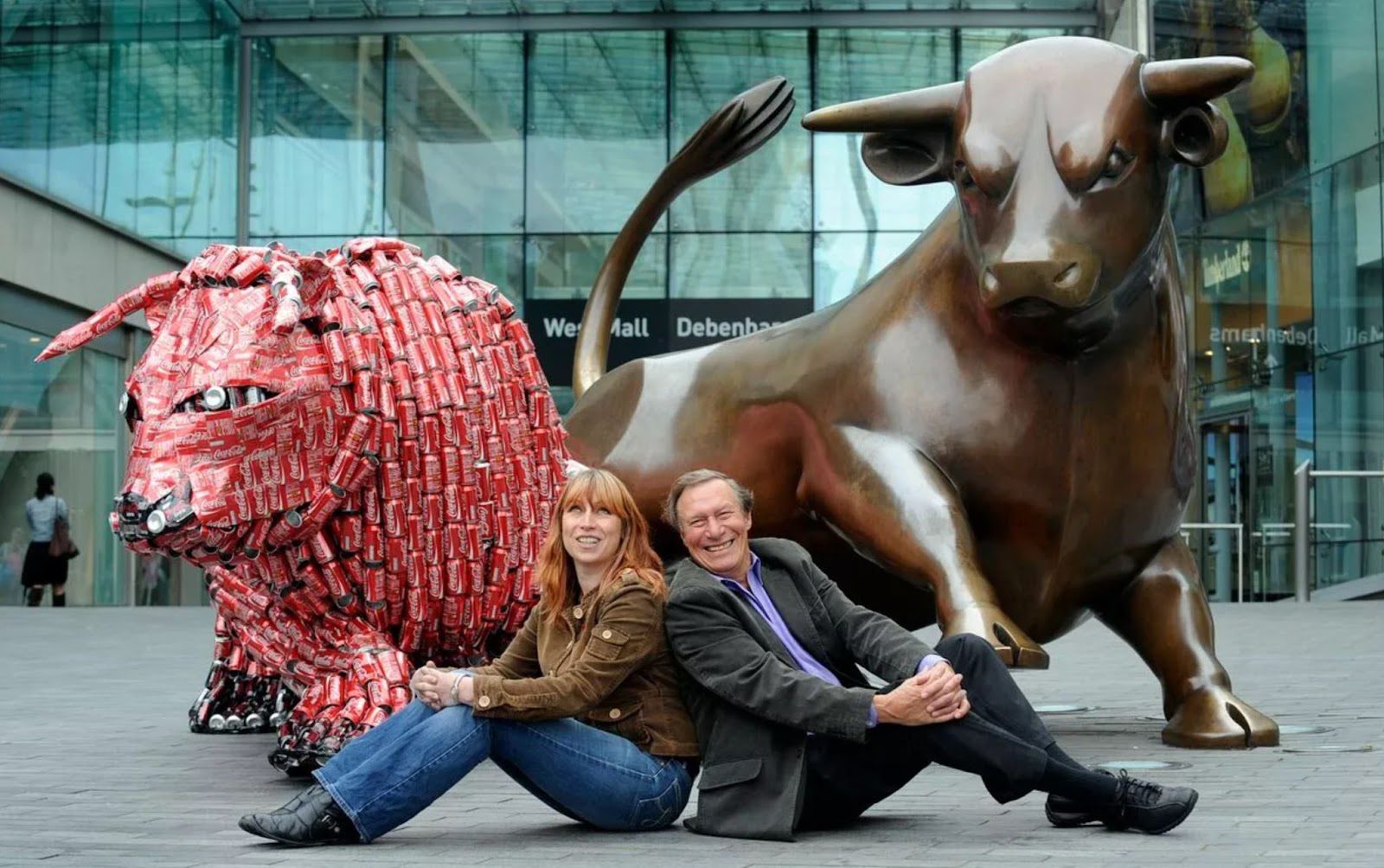
The Guardian, popularly known as The Bull, has stood in Birmingham’s Bullring shopping centre since 2003, becoming the city’s mascot and a symbol of its bull power.
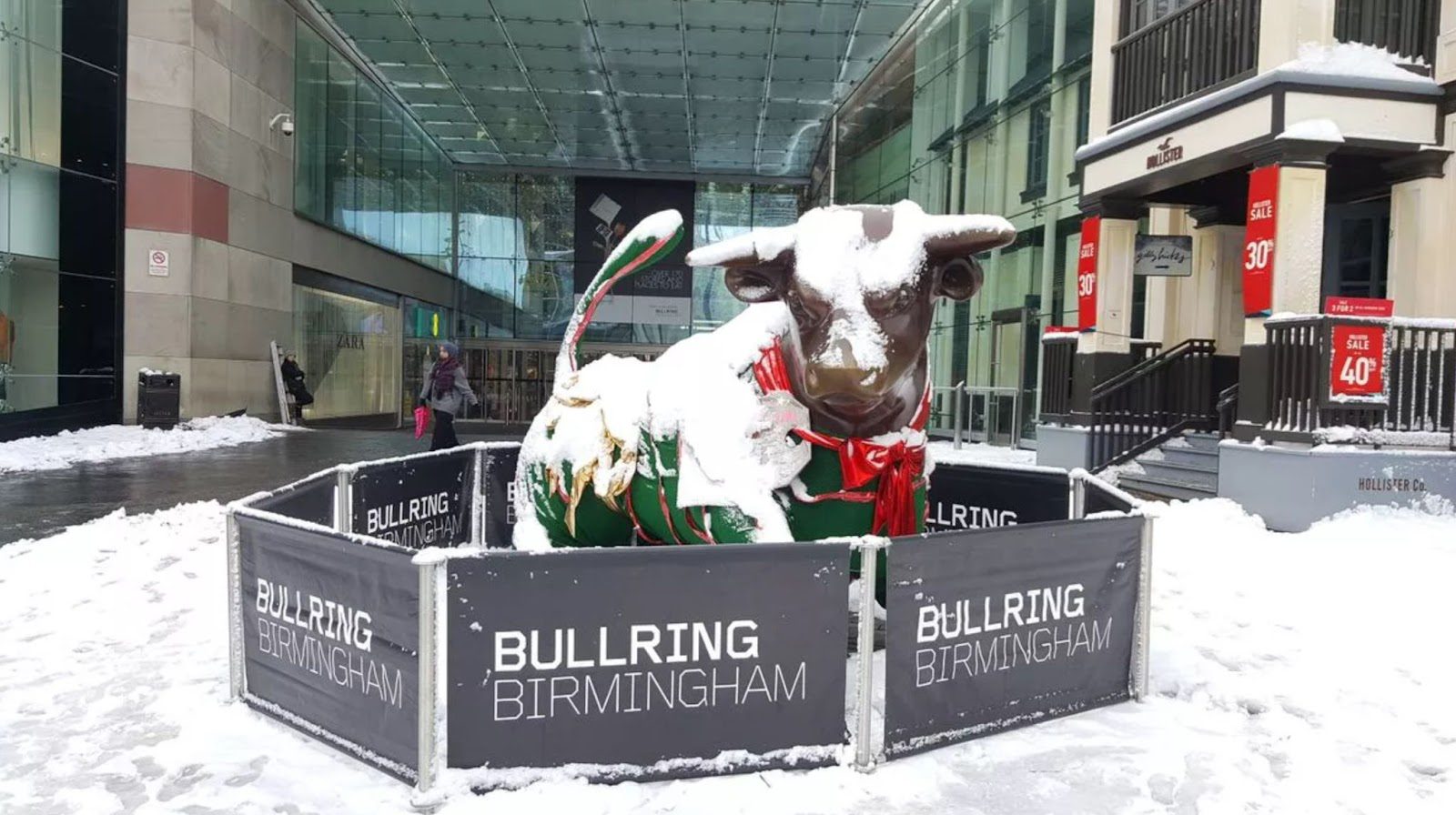
Modelled on the Hereford bull, the massive bronze object attracts the attention of tourists and is a permanent meeting place. Sometimes, people dress it up in seasonal attire. For example, during the Rothesay Classic in Edgbaston, the bull was decorated with tennis whites. It also gets a red nose at Christmas and when the temperature drops, it gets a wool jumper.
The Bull sculpture even spawned another local bull symbol, a giant animatronic creature named Ozzy, created to celebrate the city’s hosting of the 2022 Commonwealth Games. Smaller bronze versions of The Guardian, produced by Laurence Broderick, are sold around the world.
When Laurence and his family visited Birmingham, one of their favourite pastimes was to stand by The Bull. The whole family just walked around the sculpture and listened to people talking about it. Laurence especially enjoyed it, as he considered it to be the ultimate compliment.
In 2006, a vandal scratched his initials into The Guardian’s side. Brummies were more than outraged. The people of Birmingham were furious with the person who had done it. Maybe it was a group of guys drinking and having fun or a small child. The author of the sculpture was delighted with such a public reaction. In his opinion, The Bull did what he wanted, it united the residents of Birmingham.
Personal life
Laurence Broderick met Ingrid Bohne in 1959. She came from East Germany and worked as a nanny in London. They married in 1963 and had three sons. Ingrid developed Alzheimer’s disease in 2016 and their youngest son Oliver died in 2019 at the age of 46, having had numerous health problems since birth.
Those events had a devastating impact on Laurence Broderick’s life. He often visited his wife in a nursing home. He also enjoyed spending time with his two sons and four grandchildren. As Laurence couldn’t sculpt in his last years of life, he continued to paint prolifically. Laurence Broderick has entered the history of Birmingham and will be remembered thanks to his The Guardian sculpture.